


 Send Inquiry
 Send Inquiry
Digital UV-VIS Spectrophotometer
Digital UV-VIS Spectrophotometer Specification
- Shape
- Rectangular
- Control Type
- Digital Control
- Accuracy
- 0.5% T
- Temperature Resistance
- Ambient
- Features
- Auto Zero, Direct Concentration Readout, High Stability, Low Drift
- Display Type
- Digital LCD Display
- Power Supply
- AC
- Glass Type
- Quartz Cuvette
- Type
- Digital UV-VIS Spectrophotometer
- Dimension (L*W*H)
- 470 x 370 x 210 mm
- Equipment Type
- Spectrophotometer
- Equipment Materials
- MS Powder Coated Body
- Power
- 50 W
- Voltage
- 220 V / 50 Hz
- Material
- Powder Coated Metal
- Application
- Analytical and Scientific Laboratories
- Photometric Range
- -0.3 to 3.0 A, 0 to 200 %T
- Detector
- Silicon Photodiode
- Light Source
- Deuterium and Tungsten Lamp
- Resolution
- 0.1 nm
- Data Output
- RS232 interface
- Sample Compartment
- Holds upto 4 Cuvettes
- Stray Light
- 0.5%T at 220 nm & 360 nm
- Repeatability
- 0.2%T
- Weight
- Approx. 14 kg
- Baseline Flatness
- 0.003 A
- Spectral Bandwidth
- 2 nm
- Wavelength Range
- 195-1000 nm
Digital UV-VIS Spectrophotometer Trade Information
- Minimum Order Quantity
- 1 Unit
- Supply Ability
- 10 Units, , Per Week
- Delivery Time
- 1 Week
About Digital UV-VIS Spectrophotometer
Advanced Optical Performance
The spectrophotometer provides impressive accuracy (0.5%T) and low stray light (0.5%T at 220 nm & 360 nm), ensuring dependable results for critical measurements. Baseline flatness of 0.003 A and excellent repeatability (0.2%T) heighten its fidelity, delivering trusted data in daily laboratory workflows.
User-Friendly Digital Controls
Digital control with a bright LCD display allows users to easily set parameters and directly read concentrations. The system supports automated zeroing and incorporates direct RS232 data output, streamlining analysis and documentation for busy laboratory environments.
Flexible Sample Handling and Durability
With space for up to four quartz cuvettes, the sample compartment maximizes throughput and efficiency. Its MS powder-coated metal body ensures longevity, while the temperature resistance to ambient conditions makes it suitable for routine and demanding laboratory applications.
FAQ's of Digital UV-VIS Spectrophotometer:
Q: How is the Digital UV-VIS Spectrophotometer used in laboratories?
A: This spectrophotometer is used to measure absorbance and transmittance of liquid samples across 195-1000 nm, supporting qualitative and quantitative analyses in chemical, biological, and environmental labs.Q: What are the main benefits of the auto zero and direct concentration readout features?
A: Auto zero simplifies baseline correction, enhancing accuracy, while direct concentration readout lets users obtain results instantly without extensive manual calculation, saving time and reducing errors.Q: When should the deuterium and tungsten lamps be used for measurements?
A: The deuterium lamp is optimal for UV wavelength measurements (below 400 nm), while the tungsten lamp is best for visible and near-infrared regions, ensuring accurate spectrum coverage throughout the instrument's range.Q: Where can the spectrophotometer be installed and operated efficiently?
A: It is designed for analytical and scientific laboratories with standard ambient conditions. Its compact rectangular form (470 x 370 x 210 mm) and weight of approximately 14 kg make it suitable for standard benchtops.Q: What process is involved in operating the spectrophotometer for sample analysis?
A: Operation involves inserting quartz cuvettes with reference and test samples, calibrating using auto zero, selecting the desired wavelength, and recording absorbance or transmittance values via digital LCD or RS232 output.Q: How does the sample compartment design benefit analytical workflows?
A: Holding up to four cuvettes, the compartment facilitates multiple measurements or parallel sample processing, increasing throughput and efficiency during analysis.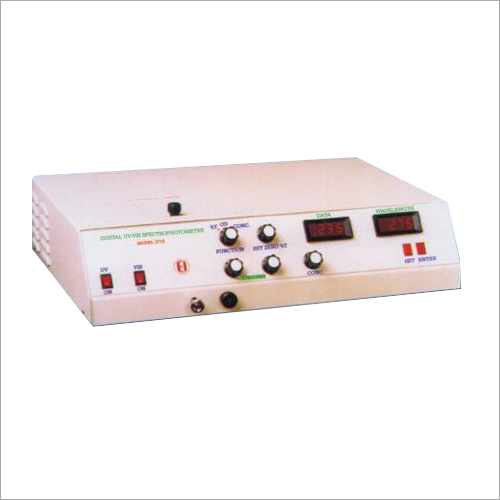

Price:
- 50
- 100
- 200
- 250
- 500
- 1000+

More Products in Laboratory Equipment Category
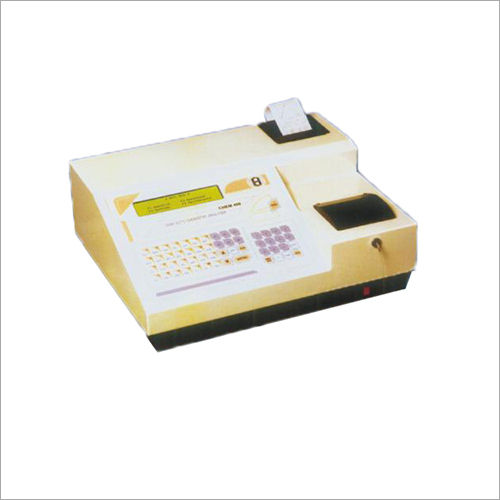
Semi Auto Chemistry Analyzer
Price Range 50000.00 - 500000.00 INR / Unit
Minimum Order Quantity : 1 Unit
Dimension (L*W*H) : 430 x 340 x 210 mm
Material : High Quality Plastic
Display Type : 7 Large LCD Touch Screen
Features : User friendly, Large onboard memory, Multilanguage software, QC program, Printer included
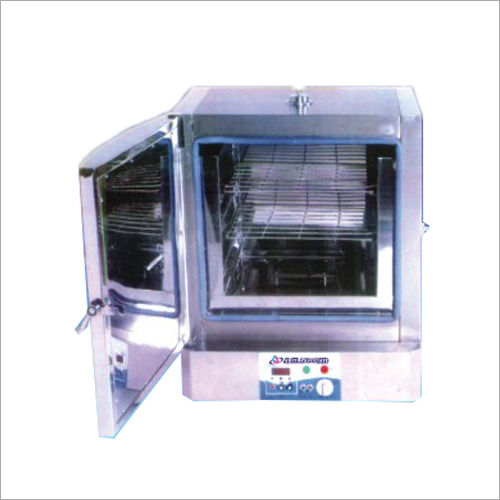
Bacteriological Incubator
Price Range 50000.00 - 500000.00 INR / Unit
Minimum Order Quantity : 1 Unit
Dimension (L*W*H) : 450 mm x 570 mm x 410 mm
Material : Stainless Steel (Inner Chamber), Powder Coated Mild Steel (Outer Chamber)
Display Type : Digital Display
Features : Air circulation, adjustable shelves, uniform temperature distribution
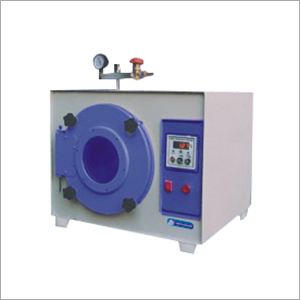
Digital Display Vacuum Oven
Price Range 50000.00 - 500000.00 INR / Unit
Minimum Order Quantity : 1 Unit
Dimension (L*W*H) : 450 x 400 x 400 mm
Material : Stainless Steel
Display Type : Digital LED Display
Features : Corrosion Resistant, Uniform Heating, Safety Door Lock, OverTemperature Protection
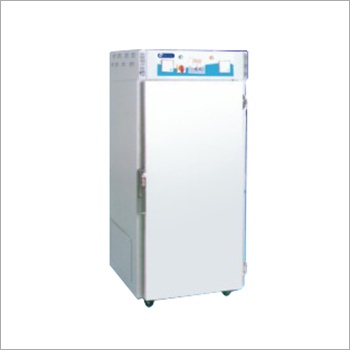
Digital Display Humidity Control Oven
Price Range 50000.00 - 500000.00 INR / Unit
Minimum Order Quantity : 1 Unit
Dimension (L*W*H) : 610 mm x 610 mm x 915 mm
Material : Powder Coated Outer, Stainless Steel Inner
Display Type : Digital LED Display
Features : Autotuning, Overtemperature Protection, Programmable Humidity & Temperature, Adjustable Shelves, Alarm System

Developed and Managed by Infocom Network Private Limited.

